
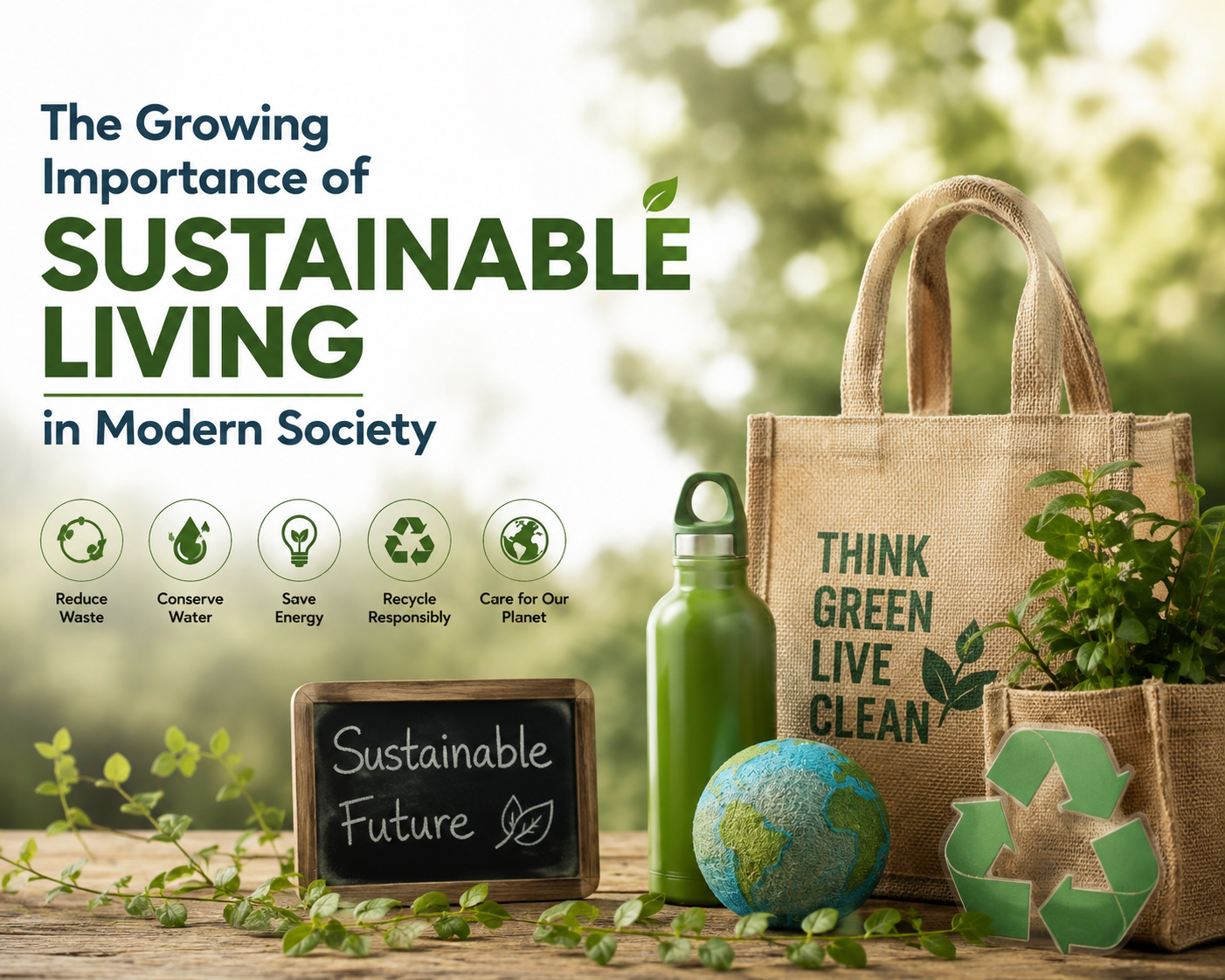
Sustainable living has become an increasingly important topic as people around the world become more aware of the relationship between everyday choices, natural resources, and the environment. From the food people eat and the products they purchase to the way they travel, use energy, and manage waste, daily habits can influence the world around us.
Sustainability is not about completely changing modern life overnight. It is about making thoughtful choices that reduce unnecessary waste, use resources responsibly, and support a healthier environment for future generations. Individuals, families, businesses, communities, and governments can all contribute to creating a more sustainable way of living.
As environmental awareness continues to grow, sustainable practices are becoming easier to understand and adopt. Small changes, when followed consistently and collectively, can contribute to meaningful progress.
What Is Sustainable Living?
Sustainable living refers to making lifestyle choices that aim to reduce unnecessary environmental impact while using natural resources responsibly.
It involves considering how everyday activities affect the environment and looking for practical ways to make those activities more efficient.
Sustainability Is About Everyday Choices
Sustainability does not always require expensive products or complicated lifestyle changes.
Simple actions such as carrying reusable bags, reducing food waste, switching off unused lights, using water carefully, repairing products, and choosing durable items can become part of a sustainable routine.
The idea is to focus on practical changes that can be maintained over time.
Everyone Can Participate
Sustainability is not the responsibility of one group alone.
Individuals can make responsible choices, businesses can improve their production processes, communities can create better waste-management systems, and governments can develop policies that support environmental protection.
When these efforts work together, the overall impact can be much greater.
Reducing Household Waste
Waste management is one of the most visible areas where individuals can make a difference.
The Importance of Reuse
Many products are thrown away even though they can still be used.
Reusing containers, clothing, furniture, books, and other household items can reduce unnecessary consumption.
Before purchasing something new, people can consider whether an existing item can be repaired, reused, or repurposed.
Recycling Can Support Resource Management
Recycling allows certain materials to be processed and used again.
Paper, glass, metal, and some types of plastic can be recycled through appropriate systems. However, recycling works best when waste is separated correctly and people understand local recycling requirements.
Reducing unnecessary consumption should remain an important part of the process because avoiding waste in the first place is often more effective than managing it afterward.
Sustainable Food Choices
Food production uses land, water, energy, transportation, and other resources. As a result, food choices can also be part of a sustainable lifestyle.
Reducing Food Waste
Food waste is a major concern in households and businesses.
Planning meals, storing food properly, using leftovers creatively, and purchasing realistic quantities can help reduce unnecessary waste.
Small changes in shopping and cooking habits can make a difference over time.
Supporting Local and Seasonal Choices
Depending on location and availability, choosing locally produced and seasonal foods can sometimes reduce transportation requirements and support local farmers and businesses.
It can also encourage people to explore a wider variety of fresh ingredients.
Saving Energy at Home
Energy consumption is another important part of sustainable living.
Use Electricity Responsibly
Simple habits such as switching off lights when they are not needed, unplugging certain unused devices, and using energy-efficient appliances can help reduce unnecessary electricity use.
People can also make better use of natural light during the day where practical.
Energy-Efficient Homes
Modern technology is providing households with more energy-efficient options.
Efficient lighting, appliances, insulation, and smart energy-management systems can help reduce energy consumption while maintaining comfort.
The right choices will depend on a household's location, budget, and specific needs.
Water Conservation Matters
Water is an essential natural resource, and responsible water use is an important part of sustainability.
Avoid Unnecessary Water Use
Simple habits such as turning off taps when water is not needed, fixing leaks, and avoiding unnecessarily long water usage can help reduce waste.
Households can also explore water-efficient fixtures and appliances where appropriate.
Respecting Water as a Limited Resource
People often take clean water availability for granted because it is easily accessible through household taps.
However, water requires infrastructure, treatment, energy, and natural resources. Using it responsibly is therefore an important part of environmental awareness.
Sustainable Transportation
Transportation is another area where lifestyle choices can influence environmental impact.
Walking and Cycling
Walking and cycling can be practical options for short journeys when conditions allow.
They can also provide opportunities for physical activity while reducing dependence on motorized transportation.
Public Transportation
Buses, trains, metro systems, and other forms of public transportation can carry many people at once.
Using public transportation where convenient can reduce the number of individual vehicles on the road and may help make urban transportation more efficient.
Choosing Efficient Travel Options
For longer journeys, people can consider transportation options based on distance, convenience, cost, and environmental impact.
The goal is not to eliminate every form of motorized travel but to make thoughtful choices whenever alternatives are practical.
Sustainable Fashion Is Gaining Attention
The fashion industry has become an important part of conversations about responsible consumption.
Buy Fewer, Better-Quality Items
Instead of frequently purchasing clothing that may only be worn a few times, consumers can consider buying durable pieces that suit their personal style and can be used for longer periods.
Quality and versatility can help reduce unnecessary consumption.
Repair and Reuse Clothing
Clothing does not always need to be discarded because of minor damage.
Repairing garments, donating usable clothing, exchanging items, and exploring second-hand options can extend the life of products.
These habits can also encourage a more thoughtful relationship with fashion.
Technology and Sustainable Living
Technology can support sustainability in several ways.
Smart devices, energy-monitoring systems, digital transportation services, online marketplaces, and environmental applications can help people make more informed decisions.
Smart Homes Can Improve Efficiency
Smart thermostats, lighting systems, and energy-monitoring devices can help households understand and manage their energy use.
Automation can also ensure that certain devices operate only when needed.
Digital Tools Can Encourage Responsible Consumption
Online platforms can help people find second-hand products, repair services, local businesses, recycling information, and sustainable alternatives.
Technology can therefore make sustainable choices more convenient and accessible.
Businesses and Sustainability
Businesses have an important role in creating a more sustainable economy.
Companies can examine how they source materials, manufacture products, transport goods, package items, and manage waste.
Sustainable Business Practices
Businesses can reduce unnecessary packaging, improve energy efficiency, minimize waste, and explore responsible sourcing practices.
They can also encourage employees to adopt sustainable practices in workplaces.
Consumers Influence Business Decisions
Customer preferences can influence business strategies.
When consumers show interest in durable products, responsible packaging, ethical practices, and efficient services, businesses may have greater motivation to develop solutions that meet those expectations.
Sustainable Cities and Communities
As cities grow, sustainability becomes increasingly important.
Urban areas need effective transportation, waste management, energy systems, water infrastructure, housing, and public spaces.
Green Spaces Improve Urban Life
Parks, gardens, trees, and other green areas can contribute to the quality of urban environments.
Green spaces can provide places for recreation and relaxation while supporting local biodiversity.
Better Urban Planning
Well-planned communities can make everyday activities more convenient.
Access to public transportation, walking routes, cycling infrastructure, markets, schools, workplaces, and recreational spaces can help reduce unnecessary travel and improve quality of life.
Teaching Sustainability to the Next Generation
Education can play an important role in building long-term environmental awareness.
Children and young people can learn about responsible consumption, waste reduction, water conservation, biodiversity, and energy use through schools and everyday activities.
Learning Through Practical Activities
Sustainability becomes easier to understand when students participate in practical activities.
School gardens, recycling projects, tree-planting programs, energy-saving campaigns, and environmental clubs can help students connect ideas with real-world actions.
Developing Responsible Habits Early
Habits developed during childhood can influence behavior later in life.
Teaching young people to value resources and avoid unnecessary waste can help create a more environmentally conscious generation.
Challenges of Sustainable Living
Although sustainable living offers many benefits, people may face practical challenges.
Cost and Availability
Some sustainable products or technologies can initially cost more than conventional alternatives.
Availability can also vary by location. Not every community has access to comprehensive recycling systems, public transportation, or sustainable product choices.
Changing Established Habits
People often continue familiar habits because they are convenient.
Changing behavior requires awareness, motivation, and practical alternatives. Sustainable choices become easier when they are affordable, convenient, and accessible.
The Future of Sustainable Living
The future of sustainability is likely to involve a combination of individual responsibility, technological innovation, business transformation, and community planning.
Renewable energy, electric transportation, efficient buildings, circular-economy models, sustainable agriculture, responsible manufacturing, and improved waste-management systems may become increasingly important.
However, technology alone will not solve every environmental challenge. Responsible consumption and informed decision-making will continue to play an important role.
Conclusion
Sustainable living is not about achieving a perfect lifestyle. It is about understanding how everyday decisions affect natural resources and making practical improvements whenever possible.
Reducing waste, conserving water, using energy responsibly, choosing transportation thoughtfully, extending the life of products, and supporting sustainable practices can all contribute to a healthier environment.
The most meaningful change often begins with small actions. When individuals, businesses, communities, and governments work toward common sustainability goals, those individual actions can become part of a much larger movement.
As society continues to develop, sustainable living can help create a future where modern convenience and environmental responsibility exist together. The choices made today can help shape the quality of life and opportunities available to future generations.